
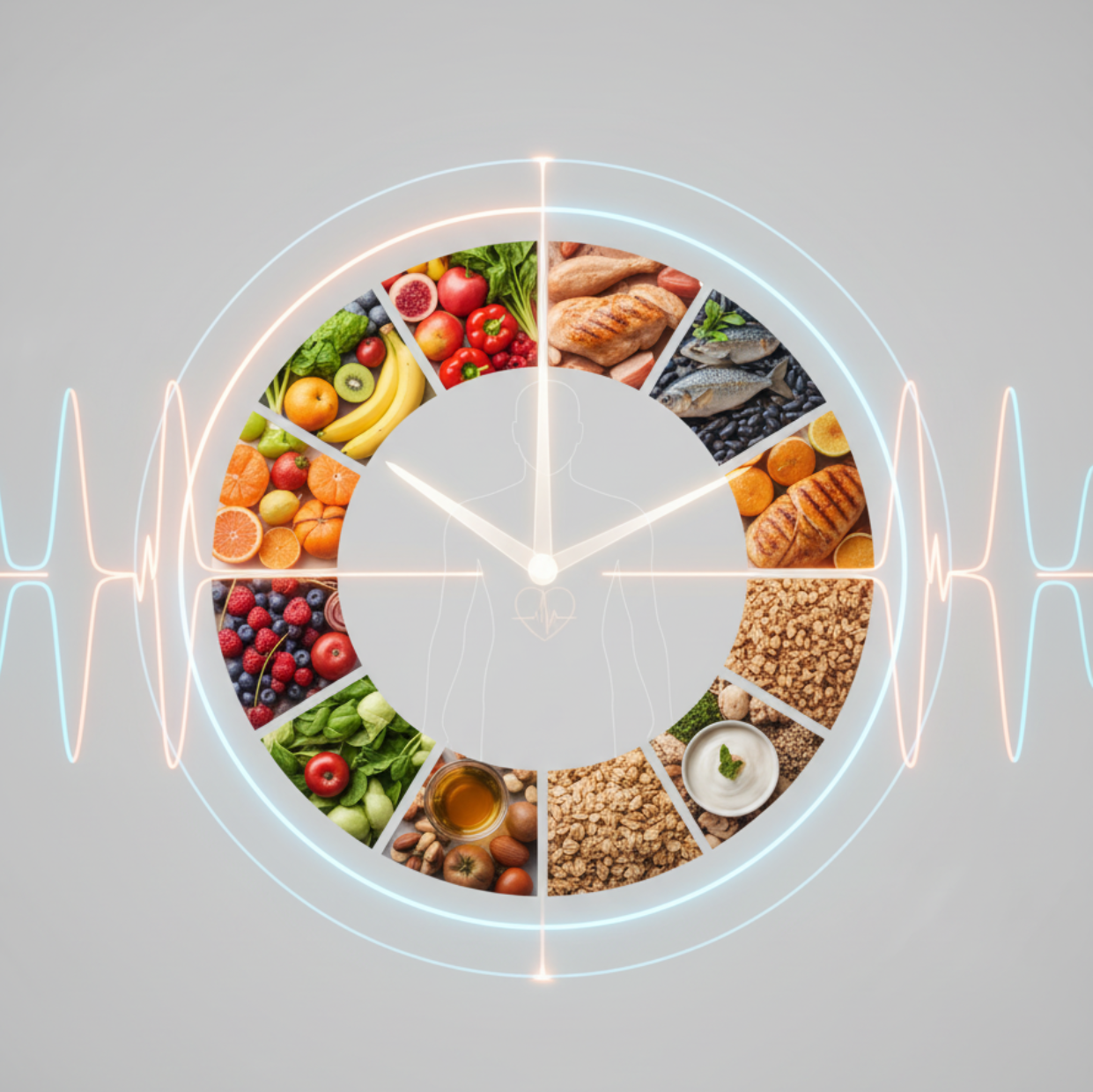
Chrononutrition: The Science of Eating With Your Body Clock
We have all been told to eat healthy, add veggies, drink water, bump up the protein intake, have healthy fats, but very few people talk about something equally important.
It is “timing.”
Chrononutrition is a growing field of nutrition science that studies how when you eat impacts your metabolism, hormones, weight, energy, digestion and sleep.
The findings are surprisingly clear – Your body has a clock and your food should follow it.
What exactly is Chrononutrition?
Chrononutrition is the science of aligning your meals with your circadian rhythm, the 24 hour internal clock that guides digestion, hormones and metabolism. Just like you have a sleep cycle, you also have a metabolic cycle. Your body digests, burns, and stores food differently at different times of the day.
The Science in Simple Words
Your metabolism is the strongest earlier in the day. In the morning and afternoon, insulin works better, digestion is faster, metabolism is higher, and your cells burn food for energy more efficiently. So calories eaten earlier are used, not stored.
At night, your metabolism switches to “rest mode”. Insulin becomes weaker, digestion slows down, blood sugar rises more and fats are stored more easily.
Eating late slows everything down. That is why, late night dinners or late night snacks are more likely to lead to weight gain, acidity, poor sleep and sugar spikes.
Why Chrononutrition Works
Chrononutrition works because your body is not a 24 hour eating machine. It works in time cycles, and every organ has a clock that expects food at certain times and rest at other times.
When your eating pattern matches this internal clock, your body works with you, not against you.
As per science:
- your body is designed to burn calories in the morning/day and store calories at night
- Your stomach, pancreas and liver are most active when the sun is up
- Insulin sensitivity is highest in the morning and your body handles carbs better at this time
- Digestive enzymes peak earlier in the day and slows down in the night
What a Chrononutrition Day Looks Like
- Eat your biggest meal earlier in the day
Breakfast – moderate
Lunch: the heaviest meal
Dinner: light and early (between 7:30-8 pm)
- Maintain regular meal timings
Try to eat meals at roughly the same time every day. This stabilizes hunger hormones (ghrelin and leptin), reduces cravings, and keeps energy steady
- Avoid Late night eating
No meals after 9 PM (earlier the better)
Late night meals increase fat storage, acidity, disturbed sleep and higher blood sugar
- Start your eating window earlier
If you follow 2 meals a day, Meal 1 should be at 10-12 PM and meal 2 should be between 5-7 PM
Early eating windows match your circadian rhythm naturally.
- Favour sunlight during the day
Your metabolism responds to light. Morning light exposure helps regulate appetite and energy burning hormones.
- Keep heavier carbs and proteins earlier
Your body handles carbs and protein best in the first half of the day. Eat your roti, rice, millets for lunch and lighter, high fiber, protein focussed dinner.
- Improve sleep
Good sleep boosts metabolism and reduces cravings. Chrononutrition and sleep work together.
Conclusion
When you eat matters. Sync meals with your body’s clock and watch your metabolism work smarter, not harder.