
Healthy Recipies Series
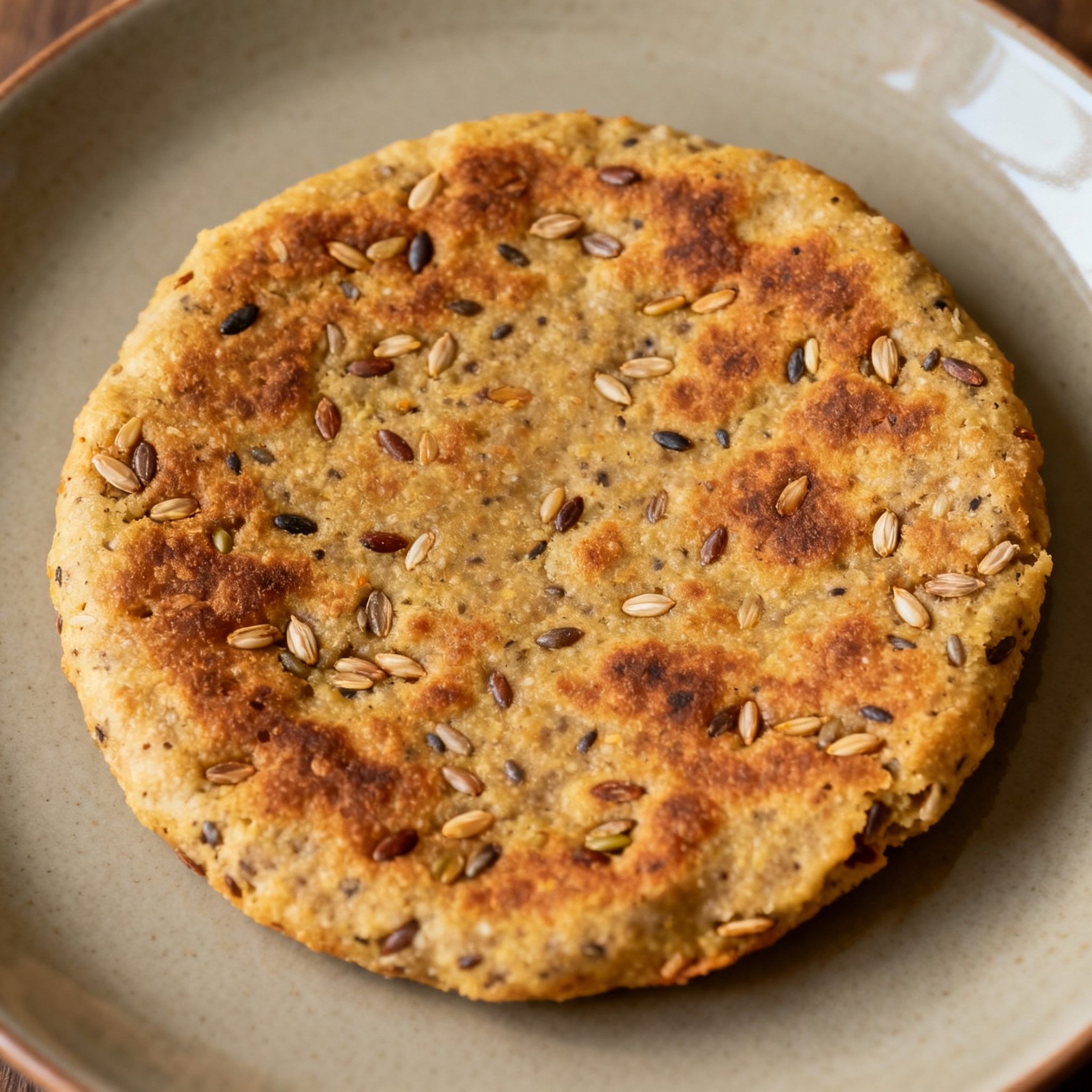
Traditional Maharashtrian Thalipeeth Recipe
Thalipeeth, a multigrain flatbread from Maharashtra, was originally made by farmers using bhajani flour—a mix of roasted grains and pulses stored for long periods. It’s still a beloved staple, eaten hot with butter (loni), chutney, or yogurt.
Ingredients (for 6–7 Thalipeeths)
- Bhajani flour – 2 cups (if unavailable, mix: ½ cup jowar flour + ½ cup bajra flour + ½ cup wheat flour + ¼ cup rice flour + ¼ cup besan)
- Onion – 1 medium, finely chopped
- Fresh coriander leaves – 2 tbsp, finely chopped
- Green chili – 1–2, finely chopped (adjust to taste)
- Cumin seeds – 1 tsp
- Ajwain (carom seeds) – ½ tsp
- Turmeric powder – ¼ tsp
- Salt – 1 tsp (or to taste)
- Water – about ¾ cup (add gradually)
- Oil or ghee – for roasting (about 2–3 tbsp total)
Method
- In a large bowl, add bhajani flour, onions, coriander, green chilies, cumin, ajwain, turmeric, and salt. Mix well.
- Gradually add water to form a soft, pliable dough (not sticky).
- Grease a banana leaf, butter paper, or plastic sheet. Take a ball of dough (about the size of a lemon).
- Pat it flat into a disc about 6–7 inches in diameter, making 3–4 small holes in the center for even cooking.
- Heat a tawa (griddle), drizzle some oil or ghee, and transfer the thalipeeth carefully.
- Cook on medium flame until golden brown spots appear on both sides, adding a little oil/ghee in the holes.
- Serve hot with a dollop of homemade butter (loni), curd, or spicy chutney.
Nutritional Value (per Thalipeeth, approx. 150g)
- Calories – ~180–200 kcal
- Protein – 6–7 g
- Carbohydrates – 28–30 g
- Fiber – 4–5 g
- Fat – 6–7 g (depending on ghee/oil used)
- Rich in: Iron, magnesium, calcium, B vitamins, antioxidants.
Thalipeeth is a complete meal on its own – combining grains, legumes, spices, and veggies for energy, satiety, and micronutrients.